
27 April 2025
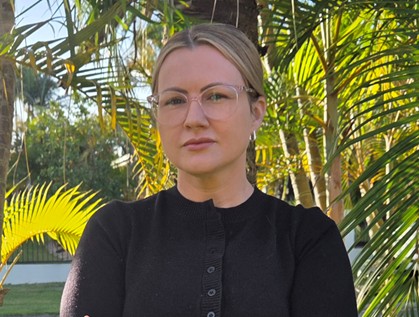
A Sunshine Coast worker has launched legal action against Woolworths Group Limited after allegedly suffering a life-altering injury while handling a pallet of watermelons as an assistant produce manager at a Caloundra store three years ago.
A Statement of Claim alleges Lyticia Freshwater was injured while breaking down thick cardboard used to secure a pallet of watermelons. While attempting to fold the stiff material by stepping on it to force it down, the cardboard suddenly snapped back, causing her to lose balance and fall backwards, striking her head on the concrete floor.
Woolworths Group Limited, one of Australia’s largest employers, is alleged to have failed to implement a safe system of work, identify or mitigate risks, and properly train and supervise the worker, with safer handling procedures, mechanical aids or clearer direction around breaking down the cardboard potentially reducing or eliminating the risk.
World Day for Safety & Health at Work (28 April) is a timely reminder of the scale of workplace injury in Australia, with more than 400 serious injuries occurring every day – with body stressing and falls, trips and slips among the leading causes.[1]
Travis Schultz & Partners personal injury lawyer, Isabella Blunt, said breaking down cardboard, while routine in retail and warehouse environments, can present serious hazards[2] – with Safe Work Australia highlighting how serious injuries can occur across all industries, not just in traditionally high-risk roles.
“Ms Freshwater’s incident isn’t the same as if you were breaking down a cardboard box at home,” Ms Blunt said.
“In a retail setting, factors such as the materials involved, how they’re handled, the force required and the physical conditions can turn a routine manual task into a hazardous one.”
“There’s a perception that workplace injuries happen in high-risk industries or ‘dangerous’ occupations – but in reality, they can happen anywhere.
“Many serious injuries occur during routine tasks, highlighting the ongoing challenge of managing risk across everyday work environments. These tasks are repeated countless times a day – but it only takes one moment for someone’s life to change.”
The claim alleges the incident resulted in a traumatic brain injury, neurological symptoms, vestibular dysfunction and a psychological injury, significantly affecting Ms Freshwater’s ability to work and carry out daily activities.
As a mother of three, including two children with additional needs, Ms Freshwater said the experience has affected every part of her life.
“I’ve been through so many stages – grief, anger and a real loss of self-worth,” Ms Freshwater said.
“I don’t get to just go home and rest – I have children who rely on me. Trying to manage that while dealing with the injury has been incredibly hard, and despite my determination to get back to work and be the person I was before, that just wasn’t possible.”
Ms Freshwater said she was a dedicated employee and that her experience following the injury had been deeply challenging.
“It’s been more than three years, and it still feels like a fight to get any sort of help,” Ms Freshwater said.
“There have been so many delays in accessing support. There were times I felt like I just wasn’t being heard, and you’re constantly having to advocate for yourself – that takes a real toll and makes it hard to move forward and heal.
“I’d been with the company for five years and was really dedicated to my role. After the injury, I received the same check-in call each week. It felt robotic, like I was just another box to tick rather than a person who needed help.
“Despite asking for help, nothing really changed, and I was left to keep pushing for support on my own.”
Ms Blunt said the case raises broader questions about how workers are supported through the compensation system, particularly where self-insurers are involved.
“The statutory scheme is there to provide support to injured workers for their recovery and return to work, but lack of communication, delays in treatment approvals and inconsistent decision-making can leave injured people in limbo, or worse still with poor health and return to work outcomes,” Ms Blunt said.
“In this case, we’re now more than three years on. With better communication, listening to her doctor and supporting her rehabilitation, she may have achieved a better health outcome, and her employer would have a good worker back on deck.”
Ms Blunt said the awareness day is an opportunity for employers across all industries to reflect on their own workplace safety measures and attitudes.
“Self-insured employers need to put their injured workers at the centre, communicate with them, listen to their doctors, because that is how they will have good workers returning to work for the benefit of everyone,” Ms Blunt said.
“World Day for Safety & Health at Work is a timely reminder that no workplace is without risk, and safety cannot simply be a box-ticking exercise. It must be taken seriously – every day.”
To learn more about Travis Schultz & Partners, visit www.schultzlaw.com.au
Media contact: Trudie Abel, Fresh PR & Marketing | 0408 119 443 | trudie@freshprm.com.au
About Travis Schultz & Partners
Travis Schultz & Partners was established in 2018 by founding Managing Partner Travis Schultz on the guiding values of fairness, respect and expertise. Today, the award-winning, nationally recognised compensation law firm is home to Queensland’s largest team of Personal Injury Accredited Specialists among its more than 70 staff. The firm services clients across the state from offices in Brisbane, the Sunshine Coast, the Gold Coast and Cairns.
[1] Source: Safe Work Australia, Key Work Health and Safety Statistics Australia, October 2025: https://data.safeworkaustralia.gov.au/sites/default/files/2025-10/Key_Work_Health_and_Safety_Statistics_Australia_2025.pdf
[2] https://www.safeworkaustralia.gov.au/safety-topic/hazards/lifting-pushing-and-pulling-manual-tasks