

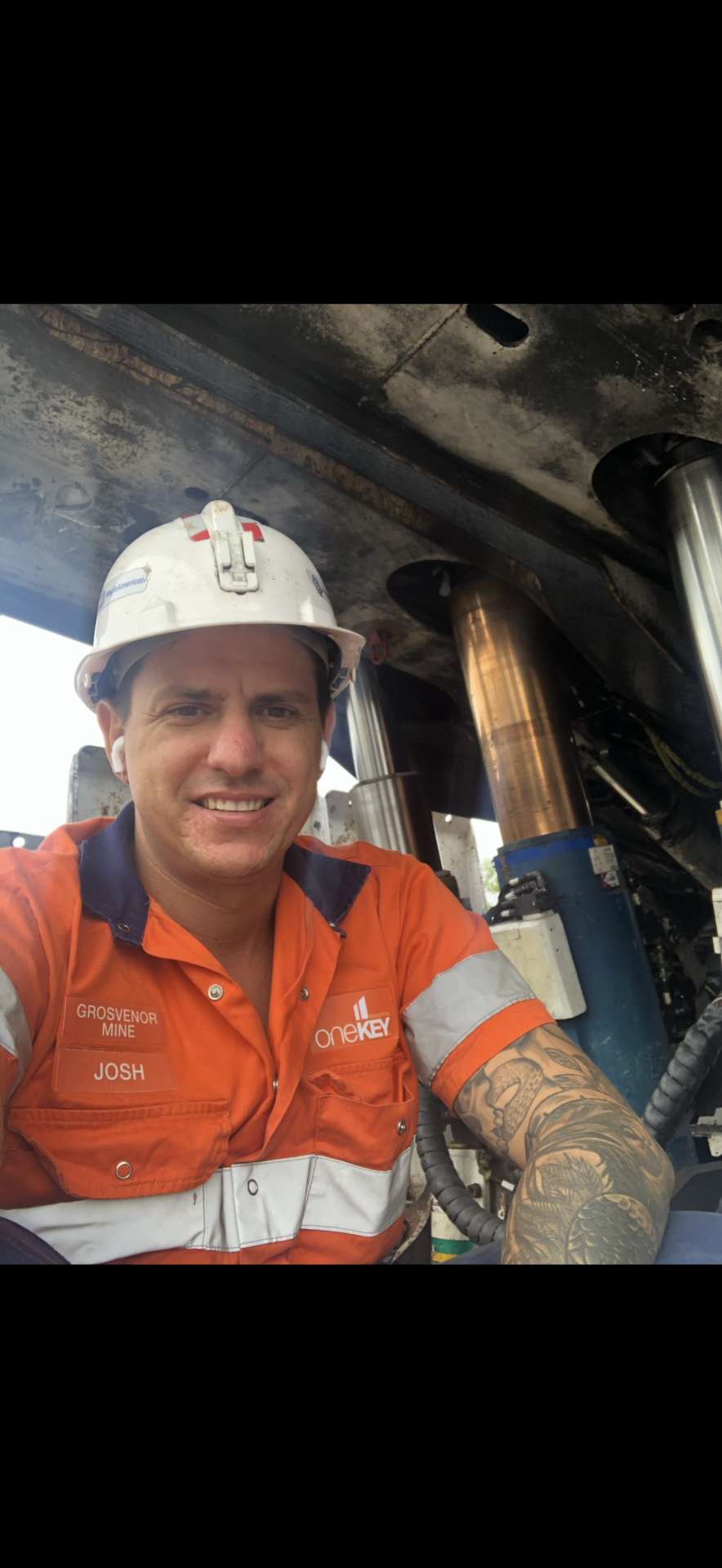
A third-generation underground coal miner, who alleges he repeatedly raised concerns about dangerous methane levels before the 2020 Grosvenor Mine explosion, has filed a PTSD claim against two Anglo coal companies over his exposure to the disaster’s traumatic aftermath.
In the six months before the explosion, Sunshine Coast resident Joshua Lehmann – then employed through labour hire as a shearer operator and leading hand – allegedly raised repeated concerns about methane levels and gas management, questioning whether it was safe to cut coal and warning that the situation was “not right”. The claim says he was repeatedly assured it was safe to continue.
The claim also alleges Grosvenor recorded at least 27 potentially dangerous methane incidents in the ten months before the explosion, including 14 in the same section of the mine during the final seven weeks. Five days before the blast, methane levels in that area were allegedly “bordering on being unmanageable”.
The methane explosion on 6 May 2020 seriously injured five miners, with Mr Lehmann alleging its aftermath caused a psychiatric injury that permanently ended his mining career. He further alleges no reasonable enquiry was made into his personal wellbeing following that unexpected exposure.
The claim says Mr Lehmann arrived at the Moranbah mine camp for his next shift unaware of the explosion, where the claim says he encountered up to 10 crying and distressed co-workers and rescuers whom he attempted to support.
Initially told “they are all dead” and the mine “blew up”, he allegedly heard accounts of injured miners screaming, one being revived multiple times and burned skin coming away in a rescuer’s hands. Their hard hats were described as having melted to the size of “taco shells”.
In the days following, Mr Lehmann was allegedly sent underground videos showing scenes from the explosion, including smoke and dust moving through the mine, workers running in fear, machinery mangled by the blast and a miner’s sleeves engulfed in flames as colleagues rushed to help him. Months later, the claim says Mr Lehmann was asked to attend the explosion site and was led through police tape, where he encountered soot, burned plastic, melted metal, machinery debris, smells from the explosion and signs of where its heat had travelled along the mine walls.
Mr Lehmann, 41, had built a 15-year career in coal mining before it was cut short.
“It is shattering. Mining was something I was passionate about and loved, and now that career has been taken away when I did nothing wrong,” Mr Lehmann said.
“My grandfather was an underground coal miner in Ipswich, and my father followed him into the industry. I idolised my father and mining became my career.”
The Supreme Court claim alleges negligence and breaches of common-law and statutory duties, including failures by the Anglo defendants to adequately manage the methane hazard and protect Mr Lehmann from foreseeable psychiatric harm arising from the explosion and its aftermath.
Commonly known as a nervous shock claim, the case alleges that Mr Lehmann’s psychiatric injury was reasonably foreseeable relying in part on the close relationships formed between workers who work and live together at mine camp.
The claim says Mr Lehmann had a direct and personal relationship with each of the five injured miners. He had worked directly with them, mentored or been mentored by them, and shared concerns with them about gas risks at the mine.
“Your FIFO crew becomes another family. You spend more time with them than your own family and you become very close. I knew each of the five injured miners and had worked beside every one of them,” Mr Lehmann said.
A 2021 Queensland Coal Mining Board of Inquiry found Grosvenor’s production exceeded its gas-management system’s capacity and that the methane hazard was not addressed in a timely and meaningful way. It also identified concerns that labour-hire and contract workers could fear jeopardising their jobs by raising safety issues.
“As a supervisor, you have an obligation to speak up. Your crew is like a second family, and you want every one of them to go home to their loved ones in one piece, so you go that extra mile to make sure it is safe,” Mr Lehmann said.
“To those mine workers who remain in the industry or have been unable to return underground due to a psychological injury, I want them to know: you are not weak, you are not broken and you should not have to suffer in silence.
“If my story can help even one worker realise that they are not alone, speak up, seek help, or understand that what they are experiencing is a legitimate response to trauma, then telling my story has a purpose.”
Mr Lehmann’s PTSD symptoms worsened despite several attempts to return to mining. He has not worked underground since 2024 and is seeking damages largely for income and employment benefits allegedly lost over what would have been a further 29-year mining career.
Mr Lehmann’s personal injury lawyer, Travis Schultz & Partners Principal and Sunshine Coast Leader Hugh Powell, said the case concerns the extent of a mine operator’s duty to protect workers from foreseeable psychiatric harm following a workplace disaster.
“The law recognises that the effects of a serious accident may extend beyond those who are physically injured or at the scene when it occurs,” Mr Powell said.
“Nervous shock claims require more than distress or ordinary emotional response – the person must have developed a recognised psychiatric condition, such as PTSD.
“They commonly involve close family relationships, but the nature of the relationship and the circumstances in which the person was exposed to the incident or its aftermath may also be relevant when considering whether a duty of care was owed to protect workers from psychiatric harm.”
A 2020 international study cited in the amended Statement of Claim found that, of the 18 workers who screened positive for PTSD symptoms following a catastrophic mining disaster, 10 had not been inside the mine when the incident occurred.
The amended Statement of Claim was filed in the Rockhampton Registry of the Supreme Court of Queensland on 24 June 2026, naming Anglo Coal (Grosvenor Management) Pty Ltd and Anglo-American Steelmaking Coal Pty Ltd as defendants. A Notice of Intention to Defend was filed on 17 August 2026. The allegations have not been determined by the Court.